International programme
Professional Internal Auditor and Risk Specialist
Internal Audit and Risk Management
Apply for the programme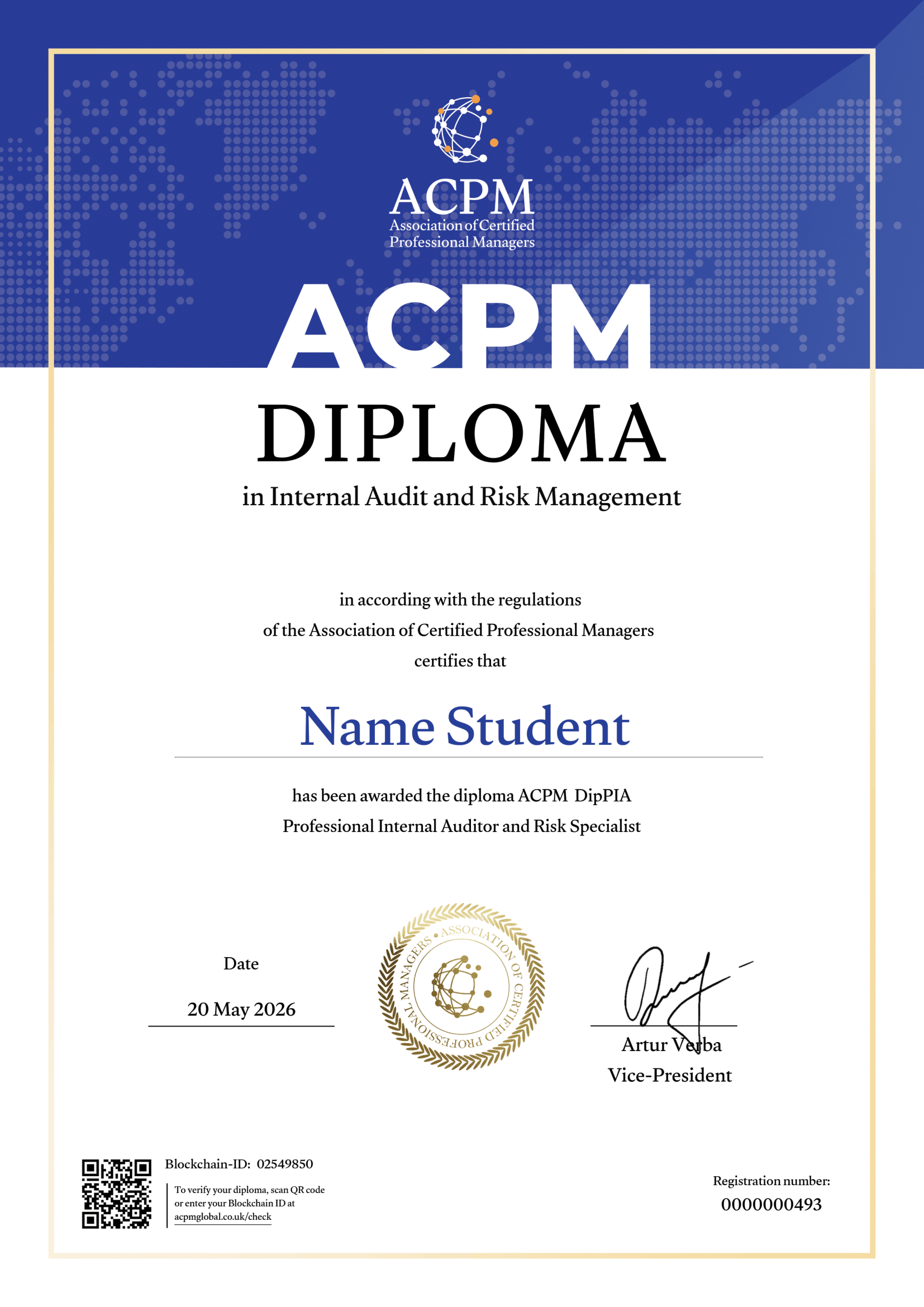
Professional Internal Auditor and Risk Specialist
Internal Audit
Modules
Topics
1.1 Introduction to the Course
1.2. Conceptual and methodological basis of finance reporting
1.3 Internal Control and Internal Audit: interaction and delimitation of influence areas
1.4 Interaction of internal control and internal audit services
1.5 Interaction of the internal audit service with external auditors
1.6 Risk-oriented concept of internal audit
Topics
2.1 Normative regulation of internal audit
2.2 Types of Audits
2.3 Regulation of the Internal Audit Service Activities
2.4 Internal audit and risk management
2.5 Successful career in internal audit
Topics
3.1 Methods and procedures for obtaining audit evidence
3.2 Application of analytical procedures and documentation of audit evidence
3.3 Documentation at stages of audit verification
3.4 Materiality level and audit sampling
3.5 Methodologies for constructing audit samples
Topics
4.1 Requirements for the documentation of audit evidence
4.2 Handling Acquired Audit Evidence
4.3 Determining the sufficiency of audit evidence
4.4 Evaluation of audit evidence
4.5 Internal audit of current assets: procedures, evidence collection, reporting
Topics
5.1 Audit risk and methods of its assessment
5.2 Assessment of risks in the internal control system
5.3 Risk map. Types. Procedure for formation
5.4 Risk assessment: building a risk map
5.5 Internal audit in risk management
Topics
6.1 Audit work program
6.2 Methodology for conducting an audit of fixed assets
6.3 Task execution and reporting by the internal auditor
Topics
7.1. Corporate fraud and financial statement fraud
7.2. "Red Flags" of fraud
Methods for detecting fraud during the audit process
Topics
Module 8 represents an equivalent of the upcoming online exam
Risk Management
Modules
Topics
1.Concept of risk: definition, classification, and components. The importance of risk management culture in an organization.
2. The role of risk management in strategic management. International risk management standards (ISO 31000, COSO) and their application.
Topics
1. Types of risks: external and internal (operational, financial, legal, cyber, reputational, etc.).
Risk identification methods: environmental analysis, expert assessments, SWOT, checklists.
2. Risk documentation: risk register.
Practice: conducting risk identification for a business case.
Topics
1. Qualitative risk analysis: probability and impact scales.
Quantitative risk analysis: Expected Monetary Value (EMV), sensitivity analysis, Bow-Tie method, Ishikawa diagram.
2. Decision tree analysis and scenario approach.
3.Building a risk map and prioritizing risks by criticality. Practice: developing a risk map based on a case study.
Topics
1. Risk Response Planning. Risk management strategies: avoidance, mitigation, transfer, acceptance.
2. Developing response plans for key risks.
Defining responsibilities and resources using a RACI matrix.
3. Practice: creating a risk response plan for a selected case. Scenario modeling.
Topics
1. Architecture of the risk management system within business processes. Integration of risk management into company strategy.
2. KPIs and Risk Tracking Methodology (RTM).
Organizing risk monitoring and control processes.
Practice: designing a risk management implementation structure.
Topics
1. Overview of modern IT solutions for risk management.
Use of automation and AI in risk identification and control.
2. Detection of anomalies and fraud using antifraud systems.
Practice: analysis of available tools on the market.
Topics
1. Organizing seminars and workshops on risk management.
Communicating risk management results to colleagues and management.
2. Critical evaluation of implemented measures. Methods of effectiveness analysis: After Action Review, Root Cause Analysis, Gap Analysis, Lessons Learned Review.
Audit & Evaluation: KPI-based evaluation, Post-Mortem analysis, Self-Assessment, feedback. Strategies for improving risk management system maturity.
3. Practice: conducting an internal training session (simulation).
Preparing a report on the state of risk management in the organization.
Topics
Topic 1. Types of Financial Risks and Their Impact on Business
1. External environment of financial risks: macroeconomics, regulation, and technology.
2. Interest rate and currency risks: nature, consequences, and mitigation methods.
3. Credit, inflation, and liquidity risks: nature, consequences, and management methods.
4. Impact of financial risks on cost of capital, financial stability, and profitability.
Topic 2. Financial Risks in Banking and Insurance
1. Key risks of banks and insurance companies: nature, manifestations, and assessment.
2. Impact of financial risks on cost of capital and return on assets in banking and insurance sectors.
3. Case studies: impact of financial risks and changes in the external environment on financial stability of banks and insurance companies.
Topics
Topic 1. Risk-Oriented Financial Modeling in Business: Tools, Scenarios, Management Decisions
1. Risk assessment tools in financial modeling: stress testing, sensitivity analysis, scenario planning.
2. Incorporating risks into financial models and forecasts: Cash Flow, NPV, discount rate, Expected Value.
3. Adapting financial models to demonstrate risk impact to management and investors.
Topic 2. Risk-Oriented Financial Planning in Financial Institutions: Capital, Liquidity, and Financial Stability
1. Tools for analyzing financial stability of banks and insurance companies: stress testing, scenario analysis, sensitivity analysis.
2. Incorporating risks into financial forecasts of financial institutions: capital, reserves, liquidity, downside scenarios.
Part 1. Internal Audit
Internal Control and Internal Audit
Topics
1.1 Introduction to the Course/p>
1.2. Conceptual and methodological basis of finance reporting
1.3 Internal Control and Internal Audit: interaction and delimitation of influence areas
1.4 Interaction of internal control and internal audit services
1.5 Interaction of the internal audit service with external auditors
1.6 Risk-oriented concept of internal audit
Module 2. Regulation of Internal Audit
Topics
2.1 Normative regulation of internal audit
2.2 Types of Audits
2.3 Regulation of the Internal Audit Service Activities
2.4 Internal audit and risk management
2.5 Successful career in internal audit
Module 3. Toolkit for Internal Auditors
Topics
3.1 Methods and procedures for obtaining audit evidence
3.2 Application of analytical procedures and documentation of audit evidence
3.3 Documentation at stages of audit verification
3.4 Materiality level and audit sampling
3.5 Methodologies for constructing audit samples
Module 4. Audit Evidence
Topics
4.1 Requirements for the documentation of audit evidence
4.2 Handling Acquired Audit Evidence
4.3 Determining the sufficiency of audit evidence
4.4 Evaluation of audit evidence
4.5 Internal audit of current assets: procedures, evidence collection, reporting
Module 5. Identification and Management of Risks in the Internal Audit Service Centers
Topics
5.1 Audit risk and methods of its assessment
5.2 Assessment of risks in the internal control system
5.3 Risk map. Types. Procedure for formation
5.4 Risk assessment: building a risk map
5.5 Internal audit in risk management
Module 6. Stages of Conducting an Internal Audit
Topics
6.1 Audit work program
6.2 Methodology for conducting an audit of fixed assets
6.3 Task execution and reporting by the internal auditor
Module 7. Fraud
Topics
7.1 Corporate fraud and financial statement fraud
7.2 "Red Flags" of fraud
7.3 Methods for detecting fraud during the audit process
Module 8. The concluding assessment. Mock exam.
Topics
8.1. Module 8 represents an equivalent of the upcoming online exam
Part 2. Risk Management
Module 1. Introduction to Risk Management and Its Role in Modern Business
Topics
1.Concept of risk: definition, classification, and components. The importance of risk management culture in an organization.
2. The role of risk management in strategic management. International risk management standards (ISO 31000, COSO) and their application.
Module 2. Risk Identification and Classification
Topics
1. Types of risks: external and internal (operational, financial, legal, cyber, reputational, etc.).
Risk identification methods: environmental analysis, expert assessments, SWOT, checklists.
2. Risk documentation: risk register.
Practice: conducting risk identification for a business case.
Module 3. Risk Assessment and Prioritization
Topics
1. Qualitative risk analysis: probability and impact scales.
Quantitative risk analysis: Expected Monetary Value (EMV), sensitivity analysis, Bow-Tie method, Ishikawa diagram.
2. Decision tree analysis and scenario approach.
3.Building a risk map and prioritizing risks by criticality. Practice: developing a risk map based on a case study.
Module 4. Developing Risk Response Strategies
Topics
1. Risk Response Planning. Risk management strategies: avoidance, mitigation, transfer, acceptance.
2. Developing response plans for key risks.
Defining responsibilities and resources using a RACI matrix.
3. Practice: creating a risk response plan for a selected case. Scenario modeling.
Module 5. Implementing a Risk Management System in a Company
Topics
1. Architecture of the risk management system within business processes. Integration of risk management into company strategy.
2. KPIs and Risk Tracking Methodology (RTM).
Organizing risk monitoring and control processes.
Practice: designing a risk management implementation structure.
Module 6. Risk Management Technologies and Tools
Topics
1. Overview of modern IT solutions for risk management.
Use of automation and AI in risk identification and control.
2. Detection of anomalies and fraud using antifraud systems.
Practice: analysis of available tools on the market.
Module 7. Developing a Risk Management Culture in a Company
Topics
1. Organizing seminars and workshops on risk management.
Communicating risk management results to colleagues and management.
2. Critical evaluation of implemented measures. Methods of effectiveness analysis: After Action Review, Root Cause Analysis, Gap Analysis, Lessons Learned Review.
Audit & Evaluation: KPI-based evaluation, Post-Mortem analysis, Self-Assessment, feedback. Strategies for improving risk management system maturity.
3. Practice: conducting an internal training session (simulation).
Preparing a report on the state of risk management in the organization.
Module 8. Financial Risks
Topics
Topic 1. Types of Financial Risks and Their Impact on Business
1. External environment of financial risks: macroeconomics, regulation, and technology.
2. Interest rate and currency risks: nature, consequences, and mitigation methods.
3. Credit, inflation, and liquidity risks: nature, consequences, and management methods.
4. Impact of financial risks on cost of capital, financial stability, and profitability.
Topic 2. Financial Risks in Banking and Insurance
1. Key risks of banks and insurance companies: nature, manifestations, and assessment.
2. Impact of financial risks on cost of capital and return on assets in banking and insurance sectors.
3. Case studies: impact of financial risks and changes in the external environment on financial stability of banks and insurance companies.
Module 9. Integrating Risks into Financial Models
Topics
Topic 1. Risk-Oriented Financial Modeling in Business: Tools, Scenarios, Management Decisions
1. Risk assessment tools in financial modeling: stress testing, sensitivity analysis, scenario planning.
2. Incorporating risks into financial models and forecasts: Cash Flow, NPV, discount rate, Expected Value.
3. Adapting financial models to demonstrate risk impact to management and investors.
Topic 2. Risk-Oriented Financial Planning in Financial Institutions: Capital, Liquidity, and Financial Stability
1. Tools for analyzing financial stability of banks and insurance companies: stress testing, scenario analysis, sensitivity analysis.
2. Incorporating risks into financial forecasts of financial institutions: capital, reserves, liquidity, downside scenarios.