International programme
Chief Financial Officer (Operational Level)
Operational Financial Management and Management Accounting
Apply for the programme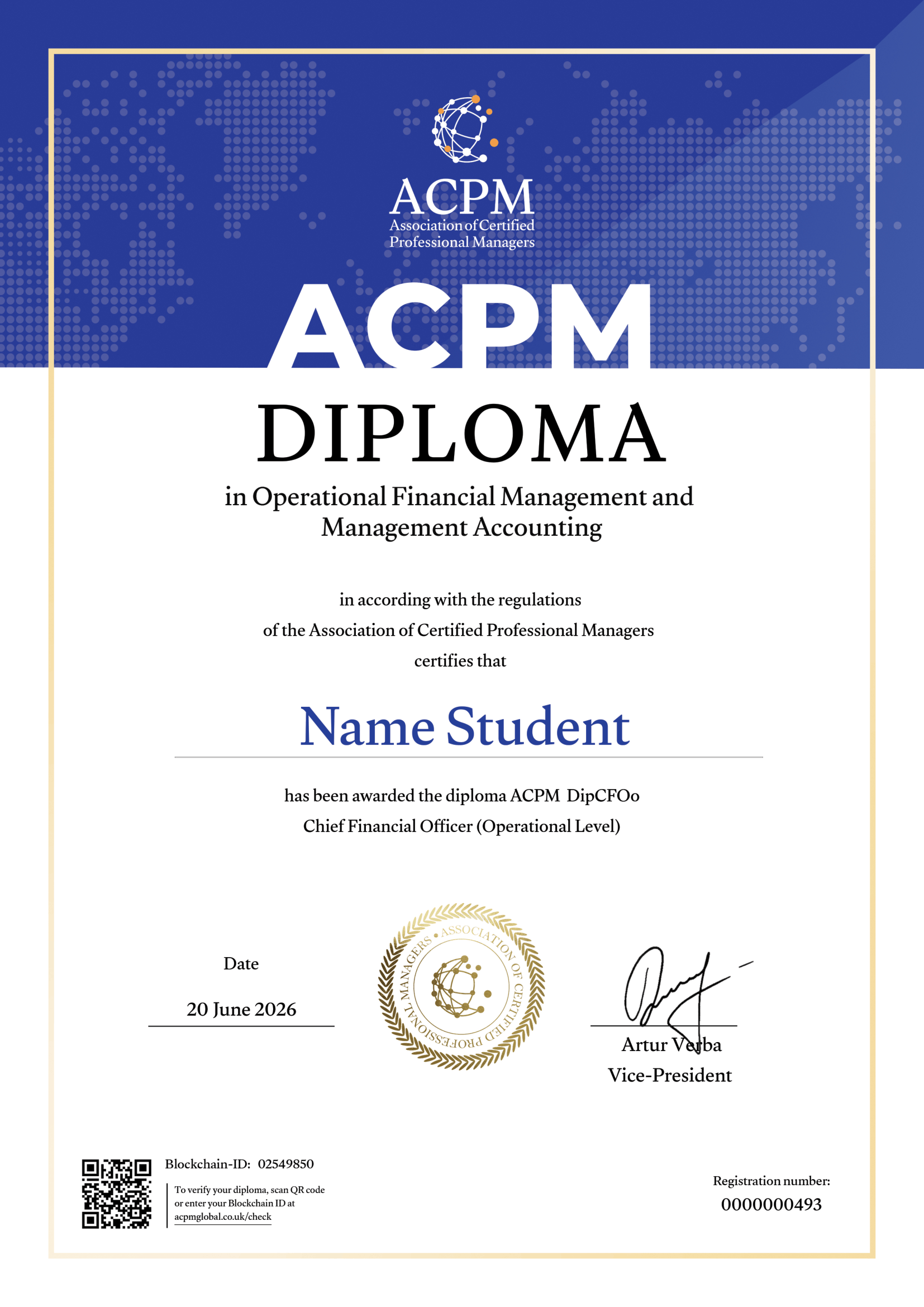
Chief Financial Officer (Operational Level)
Role of the Financial Director and Areas of Responsibility
- The Financial Director as a business role in a modern company.
- Key functions and areas of responsibility of the Financial Director.
- Differences between the Financial Director and other financial roles.
Management Accounting as the Basis for CFO Financial Decisions
- Fundamentals and role of management accounting in business.
- Cost classification and cost behaviour.
- Analysis, allocation and management of costs.
- Financial decision-making and tools for managing a company during turbulent periods.
- Application of AI in management accounting and budgeting.
- Limitations and risks of using AI.
Cost Management, Costing Methods, CVP Analysis and Break-Even Point
- Cost management concepts and costing systems.
- Accounting for and allocation of indirect costs.
- Absorption Costing and Direct Costing.
- ABC costing.
- Just-in-Time (JIT) production management.
- Cost behaviour and Cost-Volume-Profit (CVP) analysis.
- Break-even analysis.
- Sensitivity analysis.
- Product mix analysis.
- Using financial information for management decision-making.
Management Profit and Loss Reporting, Sales Structure and Product Profitability
- Management analysis and profit maximisation.
- EBIT and EBITDA.
- Management P&L reporting.
- Preparation of management reporting: P&L, Cash Flow Statement and Balance Sheet.
- Analysis of sales profitability.
- Analysis of the profitability of individual products.
Pricing
- Mark-up-based pricing.
- Pricing decisions.
- Price elasticity of demand.
- Pricing methods.
Applied Budgeting Models for Different Types of Businesses
- Applied budgeting models for different business types.
- Budgeting in manufacturing companies.
- Budgeting in service companies.
- Budgeting in trading companies.
- Budgeting in retail/network companies.
- Practical budgeting and financial modelling cases:
- production budgeting and analysis of increasing turnover;
- retail network budgeting and P&L analysis;
- budgeting an SMM agency from scratch;
- coffee shop budgeting and scenario analysis.
Target Financial Indicators, Target Capital Structure, Plan-Fact Analysis and Transfer Pricing
- Target financial indicators.
- Target capital structure of a company.
- Plan-fact analysis.
- Profitability and WACC analysis.
- Economic Value Added (EVA).
- Liquidity ratios.
- Transfer pricing methods.
Management Reporting by Product Segments and Non-Financial Performance Indicators
- Management reporting by product segments.
- Practical application of segment reporting.
- Management control using non-financial performance indicators.
Balanced Scorecard
Lessons
- Balanced Scorecard as a management control system.
- Practical case study on the Balanced Scorecard.
- Practical application of the Balanced Scorecard.
Financial Reporting for Banks and Credit Analysis
- How banks analyse company financial statements.
- Balance Sheet analysis for banks.
- Liquidity and financial stability.
- Aggregated Balance Sheet and financial assessment.
- P&L analysis for banks.
- Cash Flow analysis and debt-servicing capacity.
- Equity and financial reliability.
- Financial risks and limitations of financial reporting.
- Financial ratio analysis.
- Integrated credit assessment.
Fundamentals of IFRS
- IFRS as a business management tool.
- IFRS 15 Revenue.
- IFRS 16 Leases.
- IAS 16 Property, Plant and Equipment.
- IAS 38 Intangible Assets.
- IAS 2 Inventories.
- IAS 36 Impairment of Assets.
Transition to IFRS and Financial Reporting Management
- Transition to IFRS: transformation or continuous accounting.
- Common errors and risks in IFRS transition.
- How a CFO reads and uses IFRS financial statements.
Module 1. Role of the Financial Director and Areas of Responsibility
- The Financial Director as a business role in a modern company.
- Key functions and areas of responsibility of the Financial Director.
- Differences between the Financial Director and other financial roles.
Module 2. Management Accounting as the Basis for CFO Financial Decisions
Lessons
- Fundamentals and role of management accounting in business.
- Cost classification and cost behaviour.
- Analysis, allocation and management of costs.
- Financial decision-making and tools for managing a company during turbulent periods.
- Application of AI in management accounting and budgeting.
- Limitations and risks of using AI.
Module 3. Cost Management, Costing Methods, CVP Analysis and Break-Even Point
Lessons
- Cost management concepts and costing systems.
- Accounting for and allocation of indirect costs.
- Absorption Costing and Direct Costing.
- ABC costing.
- Just-in-Time (JIT) production management.
- Cost behaviour and Cost-Volume-Profit (CVP) analysis.
- Break-even analysis.
- Sensitivity analysis.
- Product mix analysis.
- Using financial information for management decision-making.
Module 4. Management Profit and Loss Reporting, Sales Structure and Product Profitability
- Management analysis and profit maximisation.
- EBIT and EBITDA.
- Management P&L reporting.
- Preparation of management reporting: P&L, Cash Flow Statement and Balance Sheet.
- Analysis of sales profitability.
- Analysis of the profitability of individual products.
Module 5. Pricing
- Mark-up-based pricing.
- Pricing decisions.
- Price elasticity of demand.
- Pricing methods.
Module 6. Applied Budgeting Models for Different Types of Businesses
Lessons
- Applied budgeting models for different business types.
- Budgeting in manufacturing companies.
- Budgeting in service companies.
- Budgeting in trading companies.
- Budgeting in retail/network companies.
- Practical budgeting and financial modelling cases:
- production budgeting and analysis of increasing turnover;
- retail network budgeting and P&L analysis;
- budgeting an SMM agency from scratch;
- coffee shop budgeting and scenario analysis.
Module 7. Target Financial Indicators, Target Capital Structure, Plan-Fact Analysis and Transfer Pricing
- Target financial indicators.
- Target capital structure of a company.
- Plan-fact analysis.
- Profitability and WACC analysis.
- Economic Value Added (EVA).
- Liquidity ratios.
- Transfer pricing methods.
Module 8. Management Reporting by Product Segments and Non-Financial Performance Indicators
Lessons
- Management reporting by product segments.
- Practical application of segment reporting.
- Management control using non-financial performance indicators.
Module 9. Balanced Scorecard
Lessons
- Balanced Scorecard as a management control system.
- Practical case study on the Balanced Scorecard.
- Practical application of the Balanced Scorecard.
Module 10. Financial Reporting for Banks and Credit Analysis
Lessons
- How banks analyse company financial statements.
- Balance Sheet analysis for banks.
- Liquidity and financial stability.
- Aggregated Balance Sheet and financial assessment.
- P&L analysis for banks.
- Cash Flow analysis and debt-servicing capacity.
- Equity and financial reliability.
- Financial risks and limitations of financial reporting.
- Financial ratio analysis.
- Integrated credit assessment.
Module 11. Fundamentals of IFRS
Lessons
- IFRS as a business management tool.
- IFRS 15 Revenue.
- IFRS 16 Leases.
- IAS 16 Property, Plant and Equipment.
- IAS 38 Intangible Assets.
- IAS 2 Inventories.
- IAS 36 Impairment of Assets.
Module 12. Transition to IFRS and Financial Reporting Management
Lessons
- Transition to IFRS: transformation or continuous accounting.
- Common errors and risks in IFRS transition.
- How a CFO reads and uses IFRS financial statements.