International programme
Professional Manager in International Logistics and Supply Chain Management
Logictics, Freight and Supply Chain Operations
Apply for the programme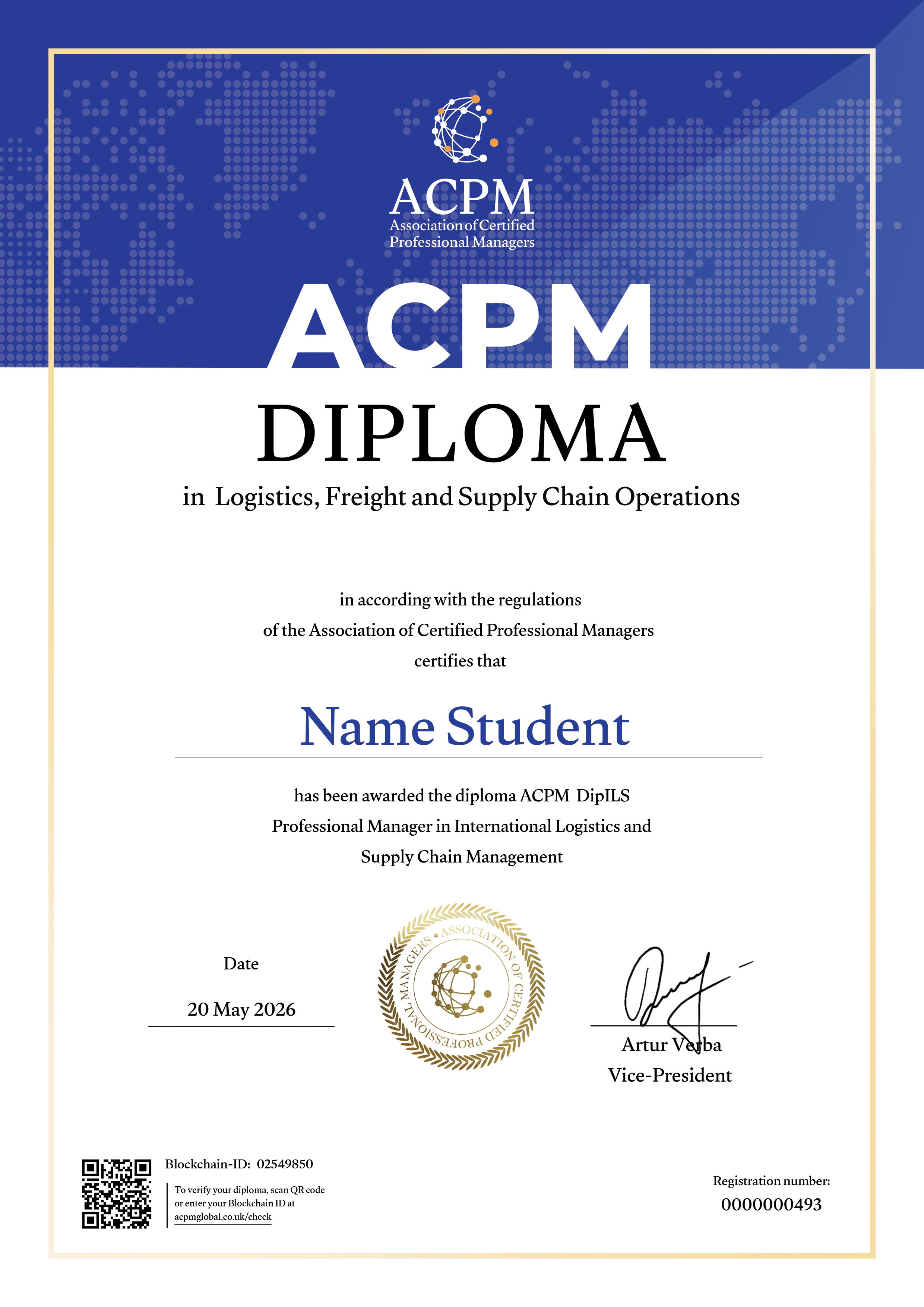
Professional Manager in International Logistics and Supply Chain Management
Module 1. Introduction to the Profession. Who Is a Logistics Specialist and What Are the Career Prospects in This Field?
- 1.2. Logistics and Its Role in Business. The Logistics Professional’s Job from A to Z
- - What is logistics, and what role does it play in today’s world?
- -What does a logistics specialist do? The main goals of a logistics specialist. Skills of a logistics specialist and how to develop them
- 1.3. Types of logistics: where the profit margin lies and how you can earn up to $5,000–10,000 per month
- - Main types of logistics
- - Which type of logistics has the highest profit margin?
- 1.4. Course Structure: How the Course Will Proceed
- - Course Guidelines: How Everything Will Work
- 1.5. Time Management: How to Plan Your Time Effectively and Achieve Your Goals
- - How to Plan Your Time Properly and Stay Focused? How to Set a Goal So You Can Achieve It?
- - Why Are Planning Skills a Must-Have for a Logistics Professional?
- 1.6. How to Learn How to Learn. Adult Motivation and the Skill of Seeing Things Through
- - Identify your inner motivation, which will help you see things through to the end
- - Discover your learning style and get tips for effective learning
- 1.7. Technical Section: Working with Course Platforms
- - How to use the various course platforms?
- - How to submit homework assignments?
- - How to organize your documents easily and conveniently?
Module 2. Product Groups in Logistics
- 2.1 Everything You Need to Know About Cargo in Logistics
- - What is cargo?
- - Main types of cargo. Which types of cargo allow a logistics specialist to earn 300 euros or more per order
- 2.2. General Cargo
- - What is general cargo? Conditions for transporting general cargo
- 2.3. Temperature-Controlled (Perishable) Goods
- -What are temperature-controlled cargoes? Examples of temperature-controlled cargoes. How to transport temperature-controlled cargoes?
- - How much can you earn from temperature-controlled cargoes?
- 2.4. Dangerous goods
- -What are dangerous goods? Classes of dangerous goods
- - How to transport dangerous goods? How much can you earn from dangerous goods?
- 2.5. Bulk and Loose Cargo
- -What is bulk and loose cargo? Examples of bulk cargo. How to transport bulk cargo?
- - How much can you earn from transporting bulk cargo?
- 2.6. Liquid Cargo
- -What is liquid cargo? Examples of liquid cargo. How to transport liquid cargo?
- - How much can you earn from liquid cargo?
- 2.7. Oversized Cargo
- -What is oversized cargo? How to transport oversized cargo?
- - How much can you earn from transporting oversized cargo?
- 2.8. Gaseous Substances
- -What are gaseous cargoes, and what are the specifics of transporting them?
Module 3. Types of Motor Vehicles
- 3.1. Curtain-Sided Trucks
- - What is a curtain side? Types of curtain sides
- - Types of cargo transported in curtain-sided trucks, types of packaging, types of securing methods
- 3.2. Refrigerated Trucks
- - What are isothermal units and refrigerated trucks?
- - Equipment in refrigerated trucks
- 3.3. Container Trucks
- - What are container trucks?
- - What types of containers are there?
- - What types of container trucks are there?
- 3.4. Grain Trucks
- - What are grain trucks and what types are there?
- 3.5. Tank Trucks
- - What are tank trucks and what do they look like?
- - What can be transported in different types of tank trucks?
- - What details do you need to know to choose the right tank truck for your cargo?
- Bonus. Session with a Psychologist
- Lesson 1. Self-Esteem Killers: Hyper-Responsibility and Perfectionism
- - How to deal with perfectionism and over-control, and how to overcome fears
- Lesson 2. Self-Esteem Killers: Over-Control and Fears
- - Why We Cling to Control
- - Practical Exercises
- Lesson 3. How to Build Financial Security in Your Life
- - Talking About Money and How to Start Earning It
- Lesson 4. Ways to Cope with Stress
- - 3 Factors That Influence Your Stress Response
- - A Technique for Reevaluating Difficult Life Situations
Module 4. Transportation Routes and Rates
- 4.1. International Routes in Road Logistics
- -What are the main branches of international routes? How should you approach each route to increase profitability?
- -What is less-than-truckload (LTL) shipping, and why is it profitable?
- 4.2. Calculating Transportation Costs
- -What factors determine the cost of a route? Why might the cost of a route suddenly increase?
- 4.3. Warehouse Logistics
- -What is warehouse logistics, and what earning opportunities does it offer?
- -How can a logistics specialist find a warehouse and negotiate a partnership with it?
Module 5. Shipping Documentation and Support
- 5.1. What Documents Must a Logistics Specialist Know?
- -What are the purposes of the TTN, ETTN, and CMR?
- -What other documents are required for international shipments (invoice, packing list, customs declarations, certificates)?
- - Who is responsible for preparing which documents?
- 5.2. Rules for Preparing a Shipment Request
- -What legal issues does a shipment request address? Why is a shipment request important, and what are the potential consequences of preparing it incorrectly?
- - What must be included in a shipment request?
- -Can a shipment request be amended, and how is this done?
- 5.3. Rules for Preparing Documents for Customs Clearance
- -What documents must the vehicle have upon arrival at customs, and what documents are required for customs clearance?
- -What information must be included in each export document?
- -What is a Carnet TIR, and why is it so important?
- -What changes might occur in the document package?
- 5.4. Monitoring and Overseeing the Shipment by a Logistics Specialist
- -What needs to be monitored BEFORE the shipment begins?
- -How can you protect yourself from unscrupulous clients and handle unpleasant situations appropriately?
- 5.5. Closing the Order and Settling Accounts with the Carrier
- -What steps does a logistics specialist take to close an order? What pitfalls await you at each stage, and how can you avoid them?
- -How are payments settled with the carrier?
- -What is accounts receivable, and how can a logistics specialist protect themselves?
- 5.6. The Logistics Specialist’s Document Database
Module 6. Oversized Cargo Transportation
- 6.1. Types of Oversized Cargo and Specifics of Their Transportation
- -What is oversized cargo transportation and what types exist. What modes of transport are used for oversized cargo
- -Who handles all the paperwork and what needs to be monitored
- 6.2. Documentation for the Transportation of Oversized Cargo
- - Steps for preparing oversized cargo for transport
- -Nuances of working with oversized cargo
- -Standard set of documents required for transport.
Module 7. Consolidated Cargo
- 7.1. What Is Consolidated Cargo and How Can You Make Money From It?
- -The concept of consolidated cargo, its risks, and nuances. Where and how to assemble consolidated cargo
- -How to identify profitable “segments” of cargo. How much can you earn from a single truckload of consolidated cargo?
- -The ideal formula for consolidated cargo
- 7.2. The System for Assembling LCL Shipments
- -The main principle of assembling LCL shipments
- -Three practical methods for LCL logistics
- 7.3. Organizing the Transportation of Consolidated Cargo
- -How to properly assemble consolidated cargo by selecting the correct dimensions
- -What to look for in the CMR. Which documents are important and how to properly pay for the cargo
- -What challenges arise with consolidated cargo and how to optimize operations to avoid these challenges
- 7.4. Documentation for the Transportation of Consolidated Cargo
- -List of the most important documents for transporting consolidated cargo. Who fills out which documents
Module 8. Finding a Carrier
- 8.1. Strategies for Finding Carriers
- -What are the main strategies for selecting carriers?
- -Which platforms should you use to find carriers in Ukraine and Europe?
- -How do you build your own database of carriers?
- 8.2. Criteria for Finding a Carrier
- -Under what conditions will a carrier want to work with you?
- -Which carriers are best to avoid? Which carriers are most likely to result in a long-term partnership?
- 8.3. Rules for Negotiating with a Carrier
- -How do you build a relationship with a carrier step by step?
- -What are the positive and negative characteristics of carriers that you should pay attention to?
- 8.4. Signing a Contract with a Carrier
- -What details must be included in the contract and the order form?
- -What should you look for when reviewing the contract?
- Bonus. An overview of useful resources for logistics professionals. How to use YouControl
Module 9. Working with Platforms: Earning Money Through Carriers
- 9.1. How to Make Money on Della
- -What are the advantages of Della? Growth strategies on Della
- 9.2. How to Work on the Della Platform
- -How to get started on Della and attract your first clients
- 9.3. How to Make Money on Lardi-Trans
- -How to stand out from the competition on the platform
- -How to find the right clients—those you can trust and with whom you can build a long-term partnership.
- 9.4. How to work on the Lardi-Trans platform
- -How to get started and attract your first clients
- 9.5. The Trans.eu freight exchange. What is it and how does it work?
- 9.6. Workshop: How to work with carriers in practice
Module 10. Maritime Transport
- 10.1. Maritime Transportation: Advantages and Disadvantages
- -You’ll see how maritime shipping to Ukraine works today and in 2026,
- -You’ll learn how to protect cargo from military risks in Ukraine,
- -You’ll understand why a freight forwarder plays a key role in organizing transportation from start to finish.
- 10.2. Ukraine’s Maritime Logistics in 2026: Routes, Risks, and the Role of the Logistics Specialist
- -When to choose maritime transport. Advantages of maritime logistics
- 10.3. Seagoing Vessels in Logistics: Characteristics and Purposes
- - You’ll learn about the 5 types of seagoing vessels and their features,
- - You’ll learn how to select the right vessel for each type of cargo.
- 10.4. Types of Cargo and Packaging: How to Choose the Optimal Mode of Transport
- -What types of cargo and packaging are used in ocean freight? How can you easily identify the type of packaging?
- 10.5. Handling Dangerous and Oversized Cargo
- -You’ll understand what dangerous and oversized cargo are, and why this is one of the most challenging and profitable niches in logistics,
- -You’ll stop being afraid to work with such cargo and start seeing it as an opportunity to earn significantly more from each client.
- 10.6. Ocean Container Shipping
- -You’ll learn how ocean shipping works, and you’ll learn the most important terms.
- 10.7. Types and Categories of Containers in Maritime Logistics
- -You’ll learn to distinguish between the different types and categories of containers.
- 10.8. Less-than-container load (LCL)
- -Stages of LCL shipping
- 10.9. Which type of shipping is right for you?
- -Learn from an expert’s experience about which shipping options to choose and the nuances of each type.
- 10.10. Incoterms and Container/Freight Handling Terms
- -What are Incoterms?
- -Container/freight handling terms: what are they, and how do they differ from Incoterms?
- 10.11. Document Flow in Ocean Freight
- -You’ll familiarize yourself with the main documents used in ocean logistics and international shipping, understand the purpose of each document, and learn the stages of the shipment at which it is used.
- 10.12. T1 – European Union Transit Customs Document
- -You’ll learn what a T1 declaration is, understand its function in international shipping, and familiarize yourself with the information contained in the T1 document.
- 10.13. Invoice and Packing List: What to Keep in Mind When Working with These Documents
- - You’ll learn the specifics of working with invoices and packing lists and understand what to pay special attention to when preparing and verifying documents to avoid mistakes.
- 10.14. The Bill of Lading from A to Z: What a Logistics Specialist Needs to Know
- -What is a bill of lading, and what are its main types?
- - What are the most important instructions regarding the bill of lading?
- -When should freight charges under a bill of lading be paid?
- -What is a container shipping line?
- -What penalties might a shipping line impose, and for what reasons?
- 10.15. Cargo Insurance. Types of Insurance Coverage
- -You’ll understand why it’s worth taking out cargo insurance and what risks it protects against,
- -You’ll learn about the main types of insurance coverage and the specifics of their application.
- 10.16. Repacking: What Is It?
- -What is repacking (as logistics professionals call it)?
- -You’ll understand how and why this process takes place.
- -You’ll learn about container deposits in Ukraine and why they exist.
- 10.17. Booking
- -What is booking?
- -Potential issues that arise at this stage
- 10.18. Shipping Lines and Agents: Specifics of Their Work, Functions, and Interaction
- -You’ll learn who shipping lines and agents are and what their responsibilities are.
- -You’ll understand when it’s better to work with shipping lines and when with agents.
- 10.19. How to Use Shipping Line Websites: An Overview of Features
- -An overview of shipping line websites,
- and why it’s important for a logistics professional to know how to work with them.
- 10.20. Specifics of Working with Agents in Different Countries
- -Specifics of working with agents in different countries around the world,
- -Nuances to pay attention to when interacting with them.
- 10.21. Finding and Selecting Agents in International Logistics
- -You’ll get resources on how and where to find agents,
- -You’ll learn tips on how to tell a professional agent from someone you shouldn’t do business with.
- 10.22. Cost of Ocean Freight and Calculation Method
- -Understand what drives up shipping costs and learn how to reduce expenses
- -Learn how to calculate shipping costs
- 10.23. How to Fill Out a Request Form. Request Form Templates and Why They’re So Important
- -You’ll learn how to properly create international shipping requests, understand what information must be included when filling out a request, learn about the most common mistakes logistics professionals make when creating requests, and learn how to avoid them.
- - Pro forma request
- 10.24. Current import ocean freight routes for logistics professionals in Ukraine
- -You’ll receive an up-to-date list of import ocean freight routes used by logistics professionals in Ukraine in 2026, learn about key trends in the ocean logistics market, and discover the factors that influence route selection.
- 10.25. Your Best Clients. Where to Start in Ocean Logistics
- -You’ll get a step-by-step guide on how to get started in this new field,
- -and understand who your clients are to ensure a successful launch.
- 10.26. How to Profit from a Client’s Problem. Real-Life Case Studies.
- -You’ll get tips on how to profit from a client’s problem.
Module 11. Air Freight
- 11.1. Air Freight. Part 1
- -Is it true that low-cost cargo isn’t transported by air?
- -What do you need to know if you’re interested in air freight?
- -What’s the difference between passenger and cargo aircraft?
- 11.2. Air Freight. Part 2
- -What are the specifics of communicating with agents?
- -What is an IATA code, and what is it used for?
- -How do you calculate shipping costs?
- -How do you submit a request to an agent, and what should you pay special attention to?
- -When and how should you use thermal packaging and special packaging?
- 11.3. Packaging and Documents
- -What types of packaging are there, and who is responsible for them
- -How to fill out an invoice correctly
- -How to fill out a packing list correctly
- -What an air waybill looks like and what you need to know about it
Module 12. Rail Transportation
- -What is the difference between rail and ocean container transportation?
- -What is a cut-off?
- -What are the specific features of rail transportation routes, and what factors should be taken into account?
- -What is the main document used in rail transportation?
Module 13. Career Development in Logistics: Working for a Company
- 13.1. The Basics of Self-Presentation
- -The Power of Self-Presentation
- -How to Conduct Yourself in an Interview. How to Present Yourself So You’ll Be Hired Even Without Experience. What Questions You Can Ask During an Interview
- 13.2. How to Create an Effective Resume
- -What a resume should look like. How to present your skills in the best light
- -What to write if you have no experience
- 13.3. How to Sell Yourself at a High Value
- -What’s the difference between a logistics specialist earning 20,000 UAH and one earning $5,000? How a logistics specialist earning 20,000 UAH can reach $5,000
- -What an employer is willing to pay you even more for
- 13.4. The process of finding a job at a logistics company
- -How a database of carriers will always work in your favor
- -How language skills impact your career
- -Where to look for a job and how to grow personally
- 13.5. What to say in an interview to ensure you get hired?
- -How to present yourself during an interview
- -What questions you should ask a potential employer. How to tell, even during the interview, if this is the right company for you
- 13.6. Red flags in employment contracts
- -Top 6 red flags to watch out for when communicating with employers. How to tell if a company isn’t a good fit for you
- 13.7. Your First Month at the Company—How to Adapt Easily
- -Case studies of successful internships. How to get a promotion right after your internship
- -What to do to make sure your manager always notices you
- 13.8. “Warning Signs”: It’s Time to Change Jobs
- -How to properly analyze your prospects at work
- -What to consider when looking for a new job so the same situation doesn’t happen again
- -Why your dissatisfaction actually helps you grow and move forward.
- 13.9. How to Tell If You’re Ready for a Promotion
- -How to objectively evaluate your performance
- -What questions to ask yourself to determine if you need a promotion
- -What’s most important in your work strategy.
Module 14. How to Be Self-Employed in Logistics: Starting a Sole Proprietorship in Ukraine
- 14.1. Registering a Sole Proprietorship
- -You’ll be able to quickly generate an electronic digital signature (EDS), check the status of your accounts with the government for tax payments.
- 14.2. Taxation Systems: How to Choose a System
- - How to choose a tax group. Taxes in Ukraine
- - Operating rules and financial control
- 14.3. Taxes and Limits: 2026
- - When and how to pay taxes
- 14.4. Reporting and filing deadlines. How to keep track of income
- - Agency model
- - Certificates of completion: how to create them and how to work with them
- - NBU regulations. Working with clients
- 14.5. Additional documents and regulations for Ukrainians living abroad
- - How to avoid double taxation
- 14.6. Bonus. Access to a knowledge base on tax legislation for Ukraine and EU countries with an AI assistant
Module 15. Registering and Maintaining Records for a Sole Proprietorship (JDG) in International Logistics
- 15.1. Registering a Sole Proprietorship (JDG) in Poland
- - How to choose a PKD code, set up a JDG, and use CEIDG
- 15.2. Choosing a Tax System, PIT, and ZUS
- - How to Calculate Expenses and Income: 3 Taxation Systems
- 15.3. Invoices, KSeF, and Working with Customers
- - From Invoicing Rules to Best Practices in AP KSeF
- 15.4. Monthly Accounting, VAT/VAT-UE, and Annual Reports
- - How to Reconcile Sales and Expenses and Close the Month
Module 16. ACC: The Corcel Agency System
- 16.1. ACC
- -What is ACC and how does it work?
- -What types of agents are there? What is an agent’s income, and what does it depend on?
- -How to advance in your career
- 16.2. ACC: Communication
- -How to prepare for a trade show
- -How to approach a client and keep their attention. How to present your product
- 16.3. Final Lesson: What to Do After the Course
- - What fears hold a logistics professional back and how to overcome them
- -The “Wheel of Life” in the logistics profession
- -What is a personal brand and how to build one
Module 1. Introduction to the Profession. Who Is a Logistics Specialist and What Are the Career Prospects in This Field?
- 1.2. Logistics and Its Role in Business. The Logistics Professional’s Job from A to Z
- - What is logistics, and what role does it play in today’s world?
- -What does a logistics specialist do? The main goals of a logistics specialist. Skills of a logistics specialist and how to develop them
- 1.3. Types of logistics: where the profit margin lies and how you can earn up to $5,000–10,000 per month
- - Main types of logistics
- - Which type of logistics has the highest profit margin?
- 1.4. Course Structure: How the Course Will Proceed
- - Course Guidelines: How Everything Will Work
- 1.5. Time Management: How to Plan Your Time Effectively and Achieve Your Goals
- - How to Plan Your Time Properly and Stay Focused? How to Set a Goal So You Can Achieve It?
- - Why Are Planning Skills a Must-Have for a Logistics Professional?
- 1.6. How to Learn How to Learn. Adult Motivation and the Skill of Seeing Things Through
- - Identify your inner motivation, which will help you see things through to the end
- - Discover your learning style and get tips for effective learning
- 1.7. Technical Section: Working with Course Platforms
- - How to use the various course platforms?
- - How to submit homework assignments?
- - How to organize your documents easily and conveniently?
Module 2. Product Groups in Logistics
- 2.1 Everything You Need to Know About Cargo in Logistics
- - What is cargo?
- - Main types of cargo. Which types of cargo allow a logistics specialist to earn 300 euros or more per order
- 2.2. General Cargo
- - What is general cargo? Conditions for transporting general cargo
- 2.3. Temperature-Controlled (Perishable) Goods
- -What are temperature-controlled cargoes? Examples of temperature-controlled cargoes. How to transport temperature-controlled cargoes?
- - How much can you earn from temperature-controlled cargoes?
- 2.4. Dangerous goods
- -What are dangerous goods? Classes of dangerous goods
- - How to transport dangerous goods? How much can you earn from dangerous goods?
- 2.5. Bulk and Loose Cargo
- -What is bulk and loose cargo? Examples of bulk cargo. How to transport bulk cargo?
- - How much can you earn from transporting bulk cargo?
- 2.6. Liquid Cargo
- -What is liquid cargo? Examples of liquid cargo. How to transport liquid cargo?
- - How much can you earn from liquid cargo?
- 2.7. Oversized Cargo
- -What is oversized cargo? How to transport oversized cargo?
- - How much can you earn from transporting oversized cargo?
- 2.8. Gaseous Substances
- -What are gaseous cargoes, and what are the specifics of transporting them?
Module 3. Types of Motor Vehicles
- 3.1. Curtain-Sided Trucks
- - What is a curtain side? Types of curtain sides
- - Types of cargo transported in curtain-sided trucks, types of packaging, types of securing methods
- 3.2. Refrigerated Trucks
- - What are isothermal units and refrigerated trucks?
- - Equipment in refrigerated trucks
- 3.3. Container Trucks
- - What are container trucks?
- - What types of containers are there?
- - What types of container trucks are there?
- 3.4. Grain Trucks
- - What are grain trucks and what types are there?
- 3.5. Tank Trucks
- - What are tank trucks and what do they look like?
- - What can be transported in different types of tank trucks?
- - What details do you need to know to choose the right tank truck for your cargo?
- Bonus. Session with a Psychologist
- Lesson 1. Self-Esteem Killers: Hyper-Responsibility and Perfectionism
- - How to deal with perfectionism and over-control, and how to overcome fears
- Lesson 2. Self-Esteem Killers: Over-Control and Fears
- - Why We Cling to Control
- - Practical Exercises
- Lesson 3. How to Build Financial Security in Your Life
- - Talking About Money and How to Start Earning It
- Lesson 4. Ways to Cope with Stress
- - 3 Factors That Influence Your Stress Response
- - A Technique for Reevaluating Difficult Life Situations
Module 4. Transportation Routes and Rates
- 4.1. International Routes in Road Logistics
- -What are the main branches of international routes? How should you approach each route to increase profitability?
- -What is less-than-truckload (LTL) shipping, and why is it profitable?
- 4.2. Calculating Transportation Costs
- -What factors determine the cost of a route? Why might the cost of a route suddenly increase?
- 4.3. Warehouse Logistics
- -What is warehouse logistics, and what earning opportunities does it offer?
- -How can a logistics specialist find a warehouse and negotiate a partnership with it?
Module 5. Shipping Documentation and Support
- 5.1. What Documents Must a Logistics Specialist Know?
- -What are the purposes of the TTN, ETTN, and CMR?
- -What other documents are required for international shipments (invoice, packing list, customs declarations, certificates)?
- - Who is responsible for preparing which documents?
- 5.2. Rules for Preparing a Shipment Request
- -What legal issues does a shipment request address? Why is a shipment request important, and what are the potential consequences of preparing it incorrectly?
- - What must be included in a shipment request?
- -Can a shipment request be amended, and how is this done?
- 5.3. Rules for Preparing Documents for Customs Clearance
- -What documents must the vehicle have upon arrival at customs, and what documents are required for customs clearance?
- -What information must be included in each export document?
- -What is a Carnet TIR, and why is it so important?
- -What changes might occur in the document package?
- 5.4. Monitoring and Overseeing the Shipment by a Logistics Specialist
- -What needs to be monitored BEFORE the shipment begins?
- -How can you protect yourself from unscrupulous clients and handle unpleasant situations appropriately?
- 5.5. Closing the Order and Settling Accounts with the Carrier
- -What steps does a logistics specialist take to close an order? What pitfalls await you at each stage, and how can you avoid them?
- -How are payments settled with the carrier?
- -What is accounts receivable, and how can a logistics specialist protect themselves?
- 5.6. The Logistics Specialist’s Document Database
Module 6. Oversized Cargo Transportation
- 6.1. Types of Oversized Cargo and Specifics of Their Transportation
- -What is oversized cargo transportation and what types exist. What modes of transport are used for oversized cargo
- -Who handles all the paperwork and what needs to be monitored
- 6.2. Documentation for the Transportation of Oversized Cargo
- - Steps for preparing oversized cargo for transport
- -Nuances of working with oversized cargo
- -Standard set of documents required for transport.
Module 7. Consolidated Cargo
- 7.1. What Is Consolidated Cargo and How Can You Make Money From It?
- -The concept of consolidated cargo, its risks, and nuances. Where and how to assemble consolidated cargo
- -How to identify profitable “segments” of cargo. How much can you earn from a single truckload of consolidated cargo?
- -The ideal formula for consolidated cargo
- 7.2. The System for Assembling LCL Shipments
- -The main principle of assembling LCL shipments
- -Three practical methods for LCL logistics
- 7.3. Organizing the Transportation of Consolidated Cargo
- -How to properly assemble consolidated cargo by selecting the correct dimensions
- -What to look for in the CMR. Which documents are important and how to properly pay for the cargo
- -What challenges arise with consolidated cargo and how to optimize operations to avoid these challenges
- 7.4. Documentation for the Transportation of Consolidated Cargo
- -List of the most important documents for transporting consolidated cargo. Who fills out which documents
Module 8. Finding a Carrier
- 8.1. Strategies for Finding Carriers
- -What are the main strategies for selecting carriers?
- -Which platforms should you use to find carriers in Ukraine and Europe?
- -How do you build your own database of carriers?
- 8.2. Criteria for Finding a Carrier
- -Under what conditions will a carrier want to work with you?
- -Which carriers are best to avoid? Which carriers are most likely to result in a long-term partnership?
- 8.3. Rules for Negotiating with a Carrier
- -How do you build a relationship with a carrier step by step?
- -What are the positive and negative characteristics of carriers that you should pay attention to?
- 8.4. Signing a Contract with a Carrier
- -What details must be included in the contract and the order form?
- -What should you look for when reviewing the contract?
- Bonus. An overview of useful resources for logistics professionals. How to use YouControl
Module 9. Working with Platforms: Earning Money Through Carriers
- 9.1. How to Make Money on Della
- -What are the advantages of Della? Growth strategies on Della
- 9.2. How to Work on the Della Platform
- -How to get started on Della and attract your first clients
- 9.3. How to Make Money on Lardi-Trans
- -How to stand out from the competition on the platform
- -How to find the right clients—those you can trust and with whom you can build a long-term partnership.
- 9.4. How to work on the Lardi-Trans platform
- -How to get started and attract your first clients
- 9.5. The Trans.eu freight exchange. What is it and how does it work?
- 9.6. Workshop: How to work with carriers in practice
Module 10. Maritime Transport
- 10.1. Maritime Transportation: Advantages and Disadvantages
- -You’ll see how maritime shipping to Ukraine works today and in 2026,
- -You’ll learn how to protect cargo from military risks in Ukraine,
- -You’ll understand why a freight forwarder plays a key role in organizing transportation from start to finish.
- 10.2. Ukraine’s Maritime Logistics in 2026: Routes, Risks, and the Role of the Logistics Specialist
- -When to choose maritime transport. Advantages of maritime logistics
- 10.3. Seagoing Vessels in Logistics: Characteristics and Purposes
- - You’ll learn about the 5 types of seagoing vessels and their features,
- - You’ll learn how to select the right vessel for each type of cargo.
- 10.4. Types of Cargo and Packaging: How to Choose the Optimal Mode of Transport
- -What types of cargo and packaging are used in ocean freight? How can you easily identify the type of packaging?
- 10.5. Handling Dangerous and Oversized Cargo
- -You’ll understand what dangerous and oversized cargo are, and why this is one of the most challenging and profitable niches in logistics,
- -You’ll stop being afraid to work with such cargo and start seeing it as an opportunity to earn significantly more from each client.
- 10.6. Ocean Container Shipping
- -You’ll learn how ocean shipping works, and you’ll learn the most important terms.
- 10.7. Types and Categories of Containers in Maritime Logistics
- -You’ll learn to distinguish between the different types and categories of containers.
- 10.8. Less-than-container load (LCL)
- -Stages of LCL shipping
- 10.9. Which type of shipping is right for you?
- -Learn from an expert’s experience about which shipping options to choose and the nuances of each type.
- 10.10. Incoterms and Container/Freight Handling Terms
- -What are Incoterms?
- -Container/freight handling terms: what are they, and how do they differ from Incoterms?
- 10.11. Document Flow in Ocean Freight
- -You’ll familiarize yourself with the main documents used in ocean logistics and international shipping, understand the purpose of each document, and learn the stages of the shipment at which it is used.
- 10.12. T1 – European Union Transit Customs Document
- -You’ll learn what a T1 declaration is, understand its function in international shipping, and familiarize yourself with the information contained in the T1 document.
- 10.13. Invoice and Packing List: What to Keep in Mind When Working with These Documents
- - You’ll learn the specifics of working with invoices and packing lists and understand what to pay special attention to when preparing and verifying documents to avoid mistakes.
- 10.14. The Bill of Lading from A to Z: What a Logistics Specialist Needs to Know
- -What is a bill of lading, and what are its main types?
- - What are the most important instructions regarding the bill of lading?
- -When should freight charges under a bill of lading be paid?
- -What is a container shipping line?
- -What penalties might a shipping line impose, and for what reasons?
- 10.15. Cargo Insurance. Types of Insurance Coverage
- -You’ll understand why it’s worth taking out cargo insurance and what risks it protects against,
- -You’ll learn about the main types of insurance coverage and the specifics of their application.
- 10.16. Repacking: What Is It?
- -What is repacking (as logistics professionals call it)?
- -You’ll understand how and why this process takes place.
- -You’ll learn about container deposits in Ukraine and why they exist.
- 10.17. Booking
- -What is booking?
- -Potential issues that arise at this stage
- 10.18. Shipping Lines and Agents: Specifics of Their Work, Functions, and Interaction
- -You’ll learn who shipping lines and agents are and what their responsibilities are.
- -You’ll understand when it’s better to work with shipping lines and when with agents.
- 10.19. How to Use Shipping Line Websites: An Overview of Features
- -An overview of shipping line websites,
- and why it’s important for a logistics professional to know how to work with them.
- 10.20. Specifics of Working with Agents in Different Countries
- -Specifics of working with agents in different countries around the world,
- -Nuances to pay attention to when interacting with them.
- 10.21. Finding and Selecting Agents in International Logistics
- -You’ll get resources on how and where to find agents,
- -You’ll learn tips on how to tell a professional agent from someone you shouldn’t do business with.
- 10.22. Cost of Ocean Freight and Calculation Method
- -Understand what drives up shipping costs and learn how to reduce expenses
- -Learn how to calculate shipping costs
- 10.23. How to Fill Out a Request Form. Request Form Templates and Why They’re So Important
- -You’ll learn how to properly create international shipping requests, understand what information must be included when filling out a request, learn about the most common mistakes logistics professionals make when creating requests, and learn how to avoid them.
- - Pro forma request
- 10.24. Current import ocean freight routes for logistics professionals in Ukraine
- -You’ll receive an up-to-date list of import ocean freight routes used by logistics professionals in Ukraine in 2026, learn about key trends in the ocean logistics market, and discover the factors that influence route selection.
- 10.25. Your Best Clients. Where to Start in Ocean Logistics
- -You’ll get a step-by-step guide on how to get started in this new field,
- -and understand who your clients are to ensure a successful launch.
- 10.26. How to Profit from a Client’s Problem. Real-Life Case Studies.
- -You’ll get tips on how to profit from a client’s problem.
Module 11. Air Freight
- 11.1. Air Freight. Part 1
- -Is it true that low-cost cargo isn’t transported by air?
- -What do you need to know if you’re interested in air freight?
- -What’s the difference between passenger and cargo aircraft?
- 11.2. Air Freight. Part 2
- -What are the specifics of communicating with agents?
- -What is an IATA code, and what is it used for?
- -How do you calculate shipping costs?
- -How do you submit a request to an agent, and what should you pay special attention to?
- -When and how should you use thermal packaging and special packaging?
- 11.3. Packaging and Documents
- -What types of packaging are there, and who is responsible for them
- -How to fill out an invoice correctly
- -How to fill out a packing list correctly
- -What an air waybill looks like and what you need to know about it
Module 12. Rail Transportation
- -What is the difference between rail and ocean container transportation?
- -What is a cut-off?
- -What are the specific features of rail transportation routes, and what factors should be taken into account?
- -What is the main document used in rail transportation?
Module 13. Career Development in Logistics: Working for a Company
- 13.1. The Basics of Self-Presentation
- -The Power of Self-Presentation
- -How to Conduct Yourself in an Interview. How to Present Yourself So You’ll Be Hired Even Without Experience. What Questions You Can Ask During an Interview
- 13.2. How to Create an Effective Resume
- -What a resume should look like. How to present your skills in the best light
- -What to write if you have no experience
- 13.3. How to Sell Yourself at a High Value
- -What’s the difference between a logistics specialist earning 20,000 UAH and one earning $5,000? How a logistics specialist earning 20,000 UAH can reach $5,000
- -What an employer is willing to pay you even more for
- 13.4. The process of finding a job at a logistics company
- -How a database of carriers will always work in your favor
- -How language skills impact your career
- -Where to look for a job and how to grow personally
- 13.5. What to say in an interview to ensure you get hired?
- -How to present yourself during an interview
- -What questions you should ask a potential employer. How to tell, even during the interview, if this is the right company for you
- 13.6. Red flags in employment contracts
- -Top 6 red flags to watch out for when communicating with employers. How to tell if a company isn’t a good fit for you
- 13.7. Your First Month at the Company—How to Adapt Easily
- -Case studies of successful internships. How to get a promotion right after your internship
- -What to do to make sure your manager always notices you
- 13.8. “Warning Signs”: It’s Time to Change Jobs
- -How to properly analyze your prospects at work
- -What to consider when looking for a new job so the same situation doesn’t happen again
- -Why your dissatisfaction actually helps you grow and move forward.
- 13.9. How to Tell If You’re Ready for a Promotion
- -How to objectively evaluate your performance
- -What questions to ask yourself to determine if you need a promotion
- -What’s most important in your work strategy.
Module 14. How to Be Self-Employed in Logistics: Starting a Sole Proprietorship in Ukraine
- 14.1. Registering a Sole Proprietorship
- -You’ll be able to quickly generate an electronic digital signature (EDS), check the status of your accounts with the government for tax payments.
- 14.2. Taxation Systems: How to Choose a System
- - How to choose a tax group. Taxes in Ukraine
- - Operating rules and financial control
- 14.3. Taxes and Limits: 2026
- - When and how to pay taxes
- 14.4. Reporting and filing deadlines. How to keep track of income
- - Agency model
- - Certificates of completion: how to create them and how to work with them
- - NBU regulations. Working with clients
- 14.5. Additional documents and regulations for Ukrainians living abroad
- - How to avoid double taxation
- 14.6. Bonus. Access to a knowledge base on tax legislation for Ukraine and EU countries with an AI assistant
Module 15. Registering and Maintaining Records for a Sole Proprietorship (JDG) in International Logistics
- 15.1. Registering a Sole Proprietorship (JDG) in Poland
- - How to choose a PKD code, set up a JDG, and use CEIDG
- 15.2. Choosing a Tax System, PIT, and ZUS
- - How to Calculate Expenses and Income: 3 Taxation Systems
- 15.3. Invoices, KSeF, and Working with Customers
- - From Invoicing Rules to Best Practices in AP KSeF
- 15.4. Monthly Accounting, VAT/VAT-UE, and Annual Reports
- - How to Reconcile Sales and Expenses and Close the Month
Module 16. ACC: The Corcel Agency System
- 16.1. ACC
- -What is ACC and how does it work?
- -What types of agents are there? What is an agent’s income, and what does it depend on?
- -How to advance in your career
- 16.2. ACC: Communication
- -How to prepare for a trade show
- -How to approach a client and keep their attention. How to present your product
- 16.3. Final Lesson: What to Do After the Course
- - What fears hold a logistics professional back and how to overcome them
- -The “Wheel of Life” in the logistics profession
- -What is a personal brand and how to build one