
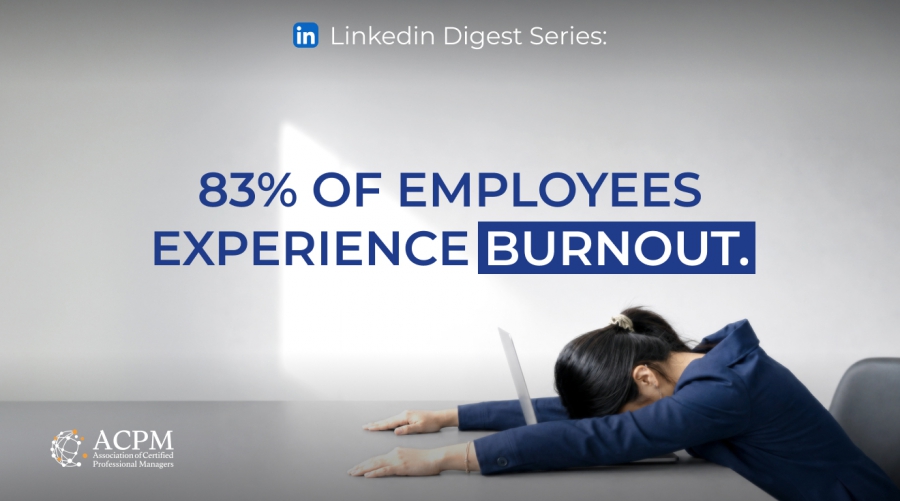
According to DHR Global, WHO, and Gallup, 2026
Employee engagement declined from 88% to 64% in just one year. This marks the largest drop in Gallup’s research history. At the same time, 83% of employees report experiencing burnout to some extent.
These two trends are occurring simultaneously. As a result, businesses lose $322 billion annually due to reduced productivity, according to the World Health Organization (WHO).
Who burns out the fastest?
The highest level of burnout among younger generations is reached as early as around the age of 25.
At the same time, the research revealed an unexpected paradox: 45% of employees who actively use AI report burnout, compared to 35% among those who do not use it. A tool that was intended to make work easier has become an additional source of pressure for many.
Why is this happening?
44% of employees identify unfair treatment as the primary cause of burnout. However, only 21% feel comfortable enough to openly discuss it with HR.
Companies are implementing employee wellbeing programs, but these initiatives often fail to address the root causes that actually exhaust people.
Research clearly shows that burnout is a management issue that can only be solved through systemic organizational change.
Sources: DHR Global Workforce Trends Report 2026, Gallup State of the Global Workplace 2026, WHO Mental Health at Work, Mercer Global Talent Trends 2026.